
Categories
Real Estate Taxes/Homestead, 2026Published January 31, 2026
Florida Homestead Exemption: How New Homeowners Avoid Costly Tax Surprises

Many new Florida homeowners experience “tax shock” when their first full property tax bill arrives. The amount is often significantly higher than what the previous owner paid, leading buyers to believe their taxes were miscalculated. In reality, this increase is usually the result of how Florida’s Homestead Exemption and assessment rules work.
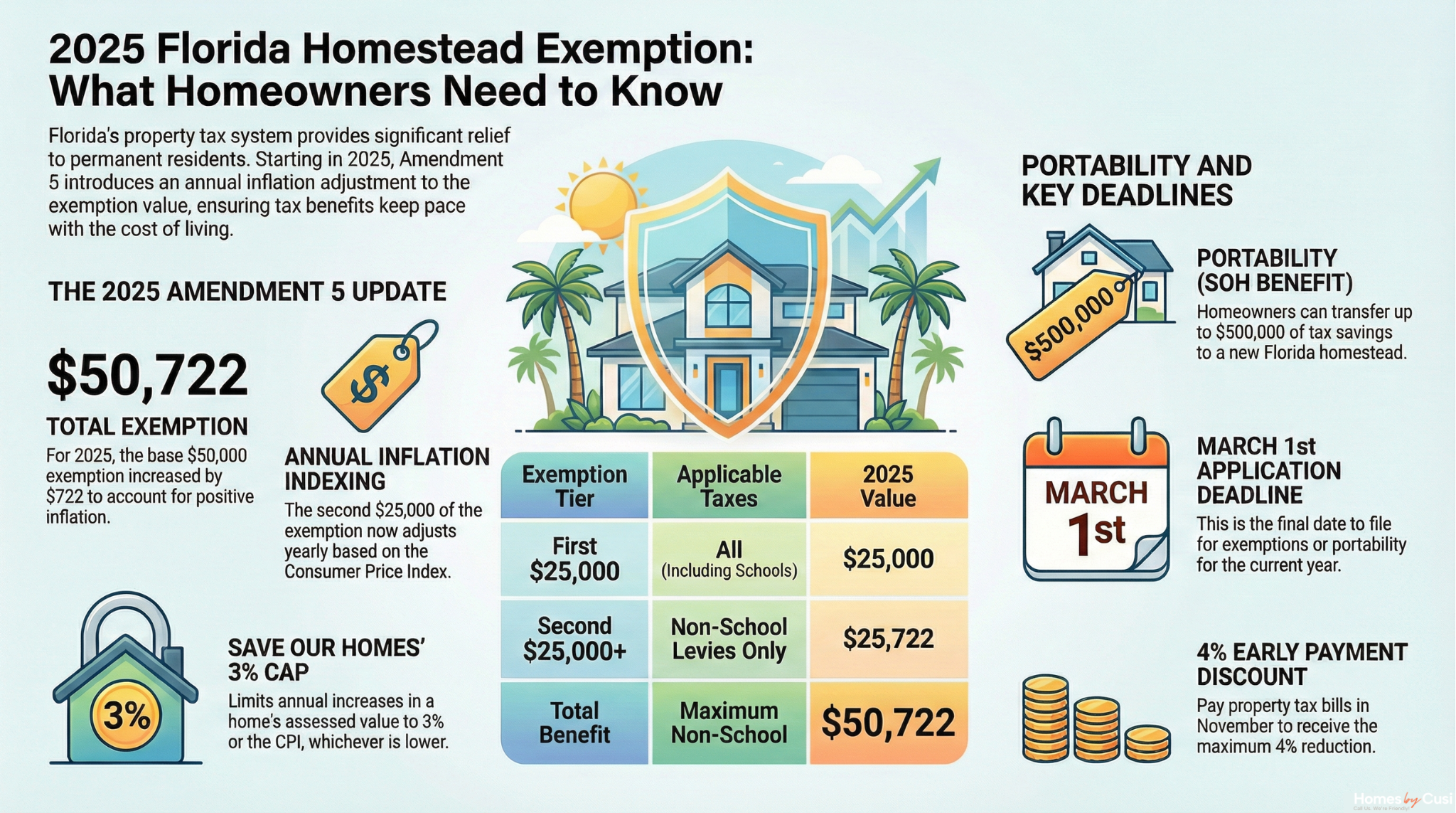
The Homestead Exemption is a constitutional benefit available to Florida residents who make a property their permanent primary residence. It can reduce a home’s taxable value by up to $50,000. The first $25,000 applies to all property taxes, while the second $25,000 applies to non-school taxes. Beginning in 2025, the second tier is indexed to inflation following the passage of Amendment 5, increasing its long-term value. To receive this benefit, homeowners must file with their County Property Appraiser by March 1 following the year of purchase.
Once the Homestead Exemption is in place, the real savings come from the Save Our Homes (SOH) assessment cap. This cap limits annual increases in a home’s assessed value to no more than 3 percent or the rate of inflation, whichever is lower, even if the market value rises much faster. Over time, this protection can result in substantial tax savings.
However, buyers should be aware of the reassessment rule that occurs upon sale. When a home changes ownership, the previous owner’s SOH cap is removed, and the property is reassessed at its current market value for the new owner. This reset is why a new homeowner’s tax bill can be dramatically higher than the seller’s, even when nothing about the property itself has changed.
Florida homeowners moving from one primary residence to another may be able to transfer their accumulated SOH savings through a process known as Portability. This allows up to $500,000 of assessed value savings to be applied to a new homestead. Homeowners generally have up to three tax years after abandoning their prior homestead to establish a new one and claim the benefit. Portability can apply whether a homeowner is upsizing or downsizing, though the transferred amount may be prorated in certain cases.
In addition to the standard Homestead Exemption, Florida offers a variety of other property tax exemptions. These include benefits for seniors with limited income, veterans with service-connected disabilities, first responders, and homeowners who construct accessory living units for elderly parents or grandparents. To avoid overpaying, homeowners should review all available exemptions with their County Property Appraiser and ensure applications are submitted before the March 1 deadline.
Understanding and properly filing for these benefits can result in thousands of dollars in long-term savings and prevent unnecessary tax surprises.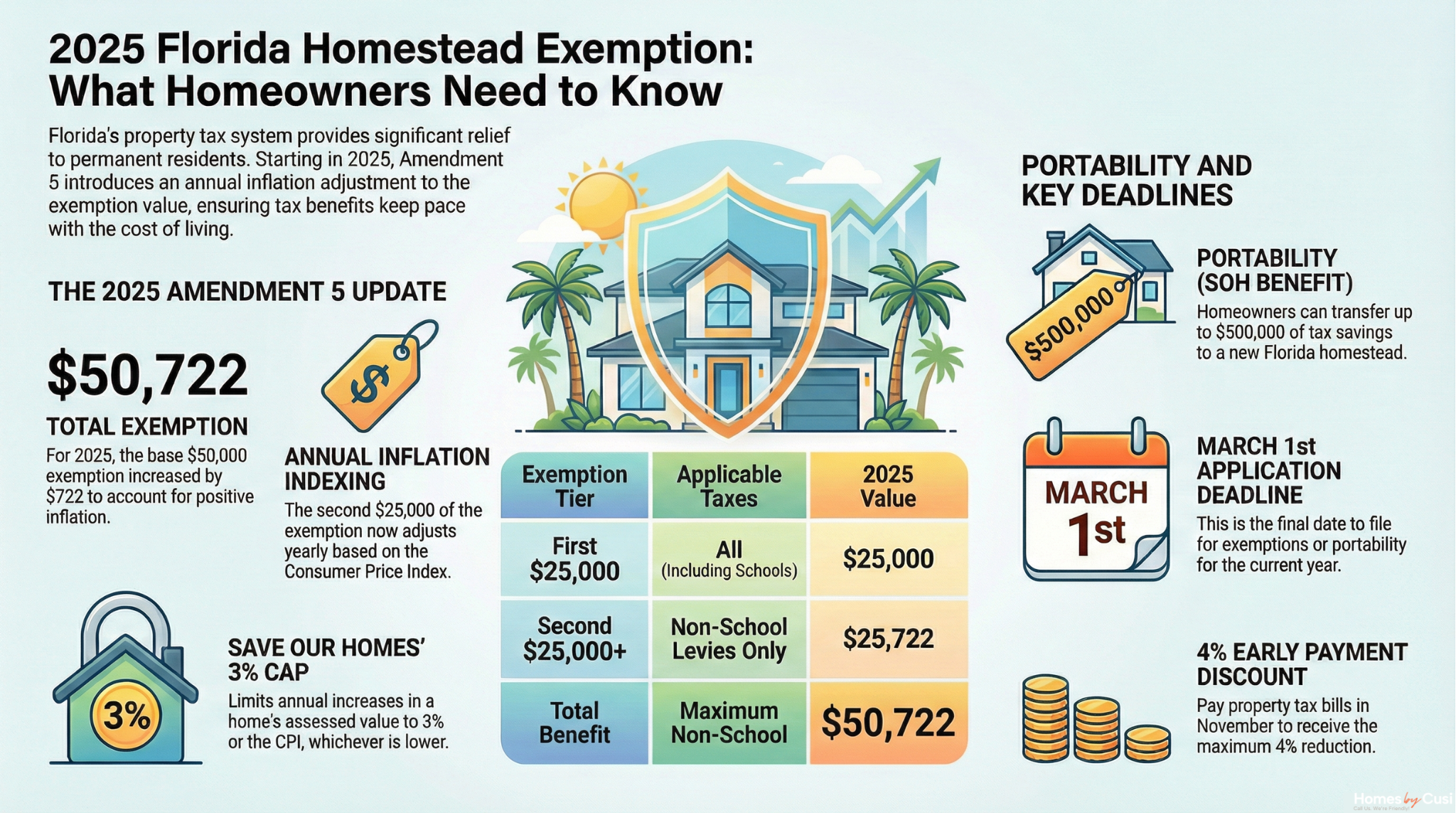

Chris Cusimano
| Homes by Cusi | Keller Williams Realty Boca Raton | PLACE | Boca Raton Realtors
or another way