
Categories
2026, Economy, Housing Market, Real Estate Taxes/Homestead, Current Events, Coral Springs, Boca Raton, ParklandPublished June 3, 2026
Florida's Proposed Property Tax Amendment: What South Florida Homeowners Need to Know

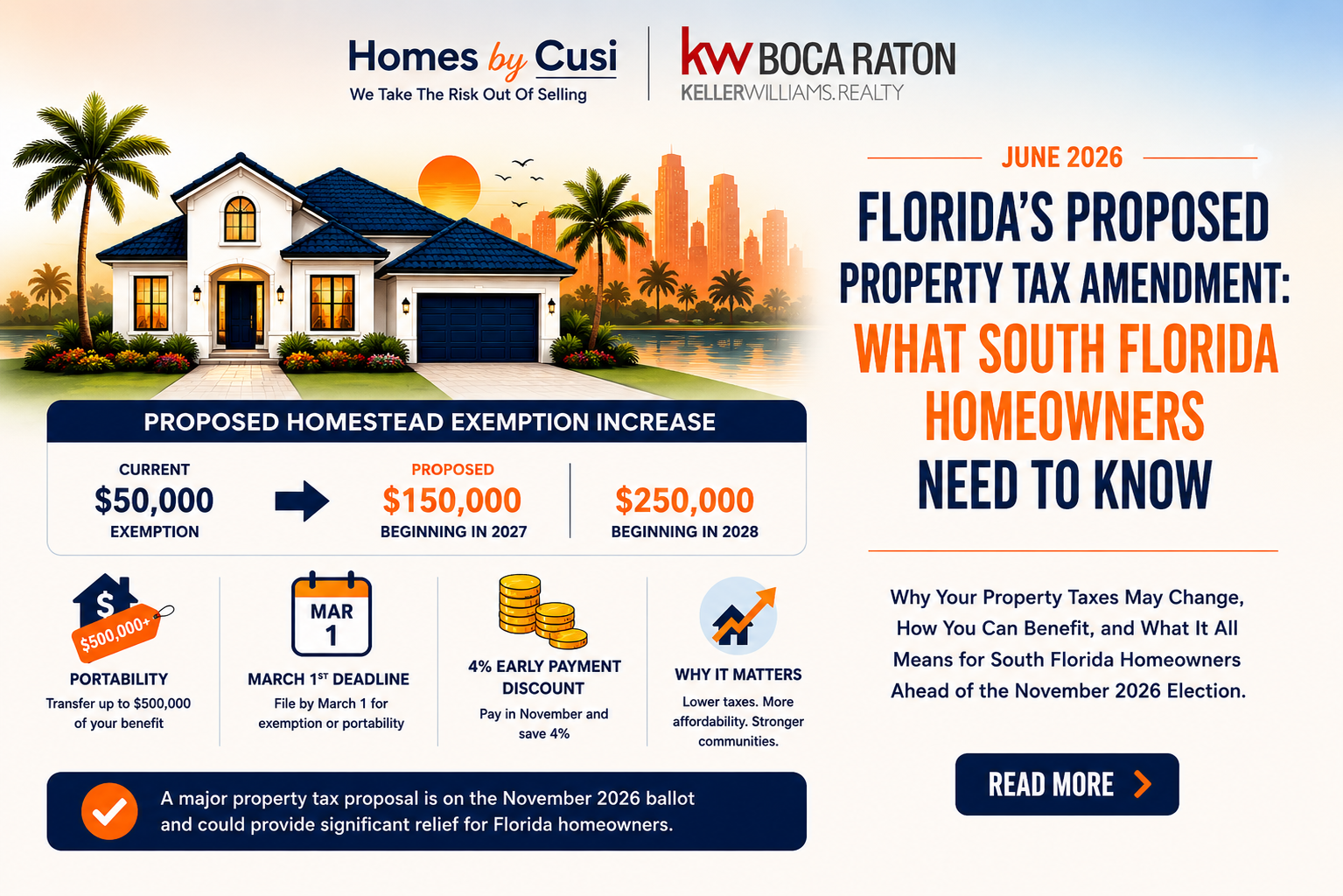
Why Your Neighbor Pays Less Property Taxes Than You (And What Could Change in Florida This November)
One of the biggest surprises many South Florida homeowners discover is that two neighbors can own nearly identical homes and pay dramatically different property taxes.
I've had clients ask me:
"Chris, how is my neighbor paying thousands less than I am when our houses are basically the same?"
The answer usually comes down to Florida's Homestead Exemption, Save Our Homes protections, and now a proposed property tax amendment that Florida voters could decide on this November.
Whether you're a homeowner, buyer, seller, retiree, or someone thinking about moving to Florida, understanding how this proposal works could have a direct impact on your future housing costs.
Let's break it down in plain English.
First, Let's Clear Up The Confusion
If you've been following the headlines, you've probably seen some version of:
"Florida is eliminating property taxes."
That's not what is currently being proposed.
The amendment expected to appear on the November 2026 ballot would significantly expand Florida's Homestead Exemption and provide additional property tax relief for many homeowners.
Supporters see it as one of the largest tax cuts in Florida history.
Critics worry about how local governments will replace lost revenue.
Before we talk about the proposal itself, let's start with the basics.
How Florida Property Taxes Actually Work
One of the most common mistakes buyers make is looking at the seller's current tax bill and assuming they'll pay something similar after they purchase the home.
Sometimes they're shocked when their actual tax bill ends up being much higher.
That's because Florida property taxes are based on several different values.
Market Value
This is what your home could likely sell for in today's market.
For example:
A home in Boca Raton, Parkland, Coral Springs, or Wellington might have a market value of $800,000.
This is the number most people think about when discussing property values.
Assessed Value
This is where things start getting interesting.
If a homeowner qualifies for Homestead Exemption, Florida's Save Our Homes law limits how quickly their assessed value can increase.
Even if their home's market value increases by 15% in a year, their assessed value may only increase by 3% or less.
That's why homeowners who purchased years ago often pay significantly less in property taxes than recent buyers.
Taxable Value
After exemptions are applied, the remaining amount becomes the taxable value.
This is the number used to calculate the property tax bill.
For example:
Market Value: $800,000
Assessed Value: $600,000
Homestead Exemption: $50,000
Taxable Value: $550,000
Taxes are calculated using the taxable value, not the market value.
What Is Save Our Homes?
Save Our Homes is one of the most valuable benefits available to Florida homeowners.
Approved by voters in 1992, the program was designed to prevent homeowners from being taxed out of their homes when property values rise rapidly.
For homesteaded properties, annual increases in assessed value are generally capped at 3% or the Consumer Price Index, whichever is lower.
For homeowners who have lived in the same home for many years, the savings can be substantial.
This is also why two neighbors with nearly identical homes may have dramatically different tax bills.
One homeowner may have purchased twenty years ago and accumulated significant Save Our Homes protection.
The other may have purchased last year and be paying taxes based on a much higher taxable value.
What Is Homestead Exemption?
Homestead Exemption is separate from Save Our Homes.
Florida currently provides up to a $50,000 exemption for homeowners who use the property as their primary residence.
This exemption reduces the taxable value of the property.
Lower taxable value generally means lower property taxes.
Most primary homeowners in Florida already benefit from this exemption.
What Is Portability?
This is one of the most overlooked tax benefits in Florida.
Portability allows homeowners to transfer some of their accumulated Save Our Homes benefit when moving from one Florida homestead property to another.
Many homeowners don't realize this exists.
I've seen homeowners miss out on significant tax savings simply because they weren't aware of portability before making a move.
If you're considering selling and buying another Florida home, this is something worth discussing before you move.
%20(7).png)
So What Is The New Property Tax Proposal?
The proposed amendment would significantly increase Florida's Homestead Exemption.
Current exemption:
$50,000
Proposed exemption:
$150,000 beginning in 2027
$250,000 beginning in 2028
The increase would apply primarily to non-school property taxes.
School taxes would continue under the proposal.
The amendment would also reduce the annual assessment cap on many non-homestead properties from 10% to 5%.
Supporters believe this could provide meaningful tax relief for Florida homeowners.
Critics worry it could reduce funding available to local governments.
What Could This Mean For South Florida Homeowners?
If approved, many homeowners could see lower property tax bills.
The exact savings would depend on:
- Property value
- Taxable value
- Homestead status
- Local tax rates
- Future implementation details
For many homeowners, property taxes are one of the largest recurring ownership expenses after insurance and mortgage payments.
Any reduction could improve affordability.
What Could This Mean For Home Buyers?
This is where things get especially important.
Many buyers already experience what I call property tax shock.
They look at the seller's current tax bill.
They purchase the home.
The property is reassessed.
Suddenly their tax bill is much higher than expected.
Whenever you're buying a home, it's important to estimate future taxes based on the purchase price rather than relying solely on the seller's current tax bill.
If this amendment passes, future buyers could potentially benefit from larger exemptions once they qualify.
What Could This Mean For Home Sellers?
Anything that potentially improves affordability is worth paying attention to.
When buyers can keep more money in their pocket each month, it may improve overall purchasing power.
That doesn't automatically mean home values will increase because of this proposal.
Real estate values are influenced by many factors.
But affordability remains one of the most important drivers of housing demand.
Why Supporters Like The Proposal
Supporters generally point to several factors:
- Rising homeowners insurance premiums
- Increasing HOA fees
- Higher maintenance costs
- Rising property values
- Higher overall housing expenses
Many supporters believe homeowners deserve additional tax relief and should be able to keep more of their money.
Retirees living on fixed incomes are often highlighted as one of the groups that could benefit the most.
Why Critics Are Concerned
Critics generally focus on local government funding.
Property taxes help fund:
- Police departments
- Fire rescue services
- Libraries
- Parks
- Road maintenance
- Infrastructure projects
- Local government operations
Critics worry that significant reductions in property tax revenue could eventually require spending cuts, increased fees, or alternative funding sources.
Supporters argue governments should control spending before increasing tax burdens on residents.
One Of The Most Debated Parts Of The Proposal
A portion of the proposal could create different treatment between current Florida residents and future residents.
Under current discussions, some enhanced benefits may favor homeowners who establish Florida residency before certain deadlines.
Supporters argue this rewards existing Florida residents.
Critics argue it creates unequal treatment between otherwise similar homeowners.
As with any proposed amendment, final details should be reviewed carefully before voting.
My Take As A South Florida Realtor
This isn't really a political issue for me.
It's a homeowner education issue.
I regularly meet homeowners who don't understand:
- Why their taxes are different from their neighbor's
- What Save Our Homes actually does
- How portability works
- Why taxes often increase after purchasing a property
Regardless of whether this amendment ultimately passes, understanding these concepts can help you make better real estate decisions.
The more informed you are, the fewer surprises you'll face when buying, selling, or owning a home in Florida.
Have Questions?
If you're considering buying, selling, downsizing, relocating, or simply want to better understand how Florida property taxes work, my team is always happy to help.
At Homes by Cusi, we believe educated homeowners make better decisions.
Feel free to reach out anytime.
We're friendly.
Related Reading: Florida Property Tax Proposal Explained (The Friendly Scoop)
Sources & Additional Resources
Save Our Homes Florida:
https://www.saveourhomesfl.com/
Florida Department of Revenue – Save Our Homes Assessment Limitation:
https://floridarevenue.com/property/Documents/pt112.pdf
Palm Beach County Property Appraiser:
https://www.pbcpao.gov
Broward County Property Appraiser:
https://web.bcpa.net
Florida Senate:
https://www.flsenate.gov
Florida Governor's Office:
https://www.flgov.com
Disclaimer
This blog is intended for educational purposes only and should not be considered legal, tax, financial, or voting advice. Tax laws, proposed amendments, and ballot language can change. Readers should consult qualified legal, tax, or financial professionals regarding their specific circumstances and review official sources before making any voting or financial decisions.

Chris Cusimano
| Homes by Cusi | Keller Williams Realty Boca Raton | PLACE | Boca Raton Realtors
or another way