
Categories
2026, Housing Market, Current EventsPublished March 3, 2026
How a Conflict 6,000 Miles Away Can Freeze the American Housing Market

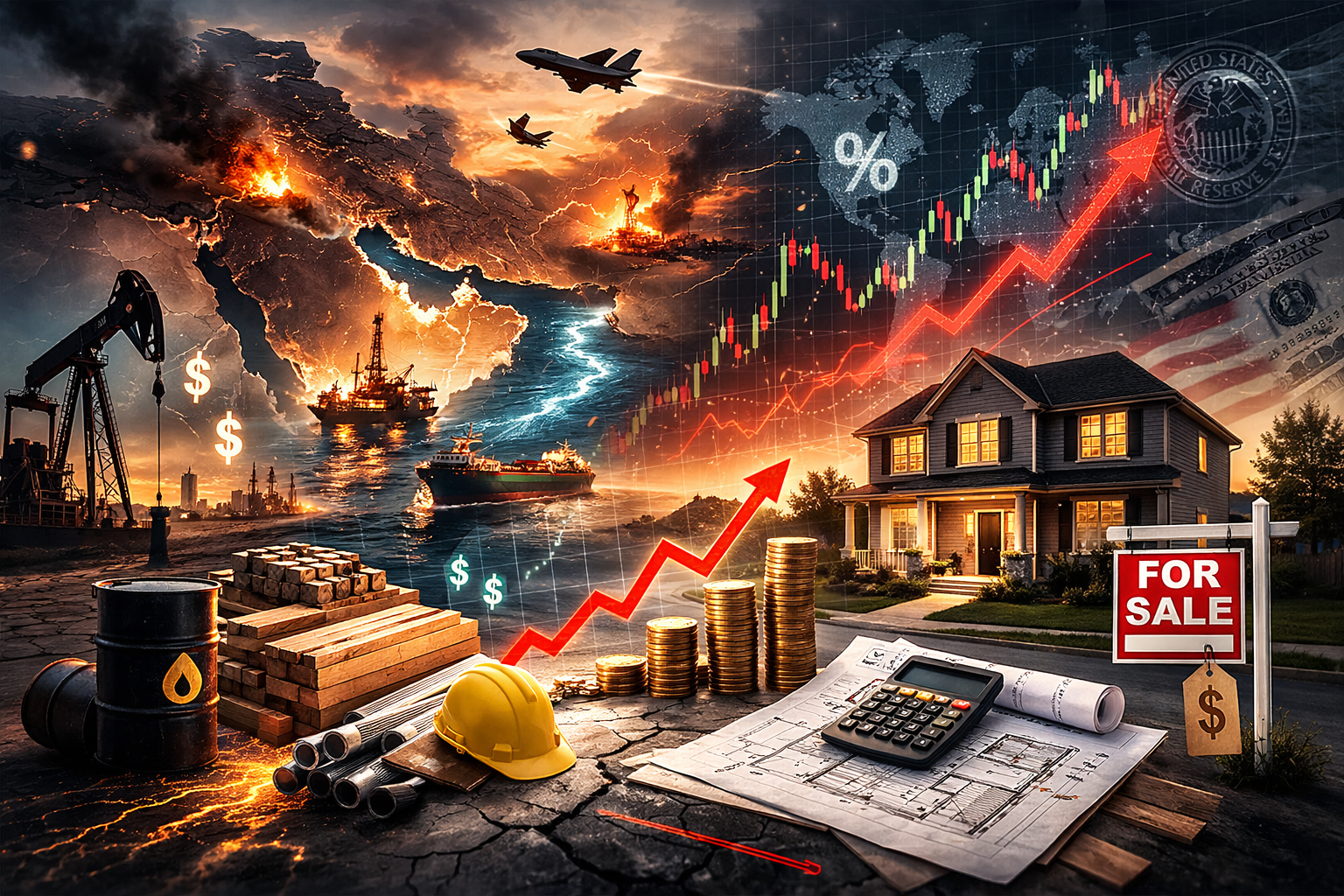
When the United States and Israel launched a wave of military strikes against Iranian targets on February 28, 2026, the immediate concerns centered on geopolitical stability and regional security. But in today’s interconnected global economy, the effects of major conflicts rarely stay contained. Almost immediately, the escalation began influencing one of the most important pillars of the American economy, and the American Dream; the U.S. housing market.
At first glance, stealth bombers flying over the Middle East might seem unrelated to a 30-year fixed mortgage in the United States. In reality, the connection runs through global energy markets, inflation, and long-standing economic patterns that link geopolitical events to interest rates and housing affordability.
Here’s how the escalating Iran conflict could influence the American real estate market.
The Short-Lived Mortgage Relief
To understand the current situation, it helps to look back just a few weeks. In early January 2026, the federal government intervened in the mortgage market in an effort to stabilize housing. Fannie Mae and Freddie Mac were directed to purchase approximately $200 billion in mortgage-backed securities.
The move injected liquidity into the bond market and helped push the average 30-year fixed mortgage rate down to roughly 5.98 percent, its lowest level in more than three years. For a brief moment, the housing market felt a surge of optimism. Millions of homeowners suddenly had the opportunity to refinance, and many prospective buyers began reentering the market.
Then the geopolitical situation changed.
Oil Disruptions and Inflation Pressure
The key link between the Middle East conflict and American mortgage rates is oil. One of the most critical oil transit routes in the world is the Strait of Hormuz, a narrow shipping corridor through which a significant portion of global oil supplies passes each day.
Military activity and rising regional tensions quickly disrupted shipping patterns in the area. Some international carriers began avoiding the route due to rising insurance costs and security concerns.
When oil prices rise, inflation often follows. Higher energy costs affect transportation, manufacturing, and nearly every sector of the economy. For the Federal Reserve, this creates a difficult balancing act. Prior to the conflict, policymakers were preparing to gradually lower interest rates to support economic growth and improve housing affordability. However, rising inflation pressures can force the Fed to slow or halt rate cuts, since lowering rates too aggressively during inflationary periods can worsen price increases.
As a result, mortgage rates that were beginning to fall may remain higher than expected.
The Hidden Economic Cost of War
Economists have long observed a historical relationship between wartime economies and rising price levels. During major conflicts, governments often attempt to keep borrowing costs manageable because wars are extraordinarily expensive to finance.
To accomplish this, governments may increase the money supply or expand spending dramatically. Over time, those policies can lead to higher inflation. As inflation rises, lenders demand higher interest rates to compensate for the declining purchasing power of money.
In practical terms, that means long-term borrowing costs, including mortgage rates, tend to increase during prolonged periods of geopolitical instability.
Construction Costs Are Rising Too
Interest rates aren’t the only factor being affected. The cost of physically building homes is also climbing.
Modern construction depends heavily on materials tied to petroleum and global supply chains. Products such as PVC pipes, insulation, roofing materials, wiring components, and various sealants are all derived from petrochemicals. When oil prices increase or shipping routes become unstable, the cost of producing and transporting these materials rises as well.
At the same time, tariffs on certain imported building materials have added additional pressure to construction costs. Higher costs for lumber, steel, aluminum, and cabinetry have made it more expensive for builders to start new projects.
When building becomes more expensive, developers often delay or cancel projects. That reduces the number of new homes entering the market, tightening supply and helping keep prices elevated.
A Divided Housing Market
These combined forces are contributing to what economists sometimes describe as a “K-shaped” housing market.
On one side of the divide, global uncertainty tends to drive wealthy investors toward safe-haven assets. U.S. real estate...particularly in major markets such as New York, Miami, and parts of Texas, has long been viewed as one of the safest places in the world to store capital. During periods of instability, international investment in these markets often increases.
On the other side are everyday American buyers who are facing the combined pressure of high home prices, higher borrowing costs, and broader economic uncertainty. For many households, affordability challenges have made homeownership feel increasingly out of reach.
Surveys already show a growing number of Americans who believe buying a home in 2026 may be unrealistic given current market conditions.
The Bottom Line
Major geopolitical events rarely stay confined to the battlefield. A military conflict thousands of miles away can ripple through global shipping routes, energy markets, financial systems, and ultimately into everyday economic decisions at home.
Those ripple effects can reach something as personal as the cost of buying a house in your neighborhood. Until global tensions ease and supply chains stabilize, the U.S. housing market may remain in a cautious holding pattern shaped by forces far beyond the local market.
Watch the video here OR Listen to the podcast here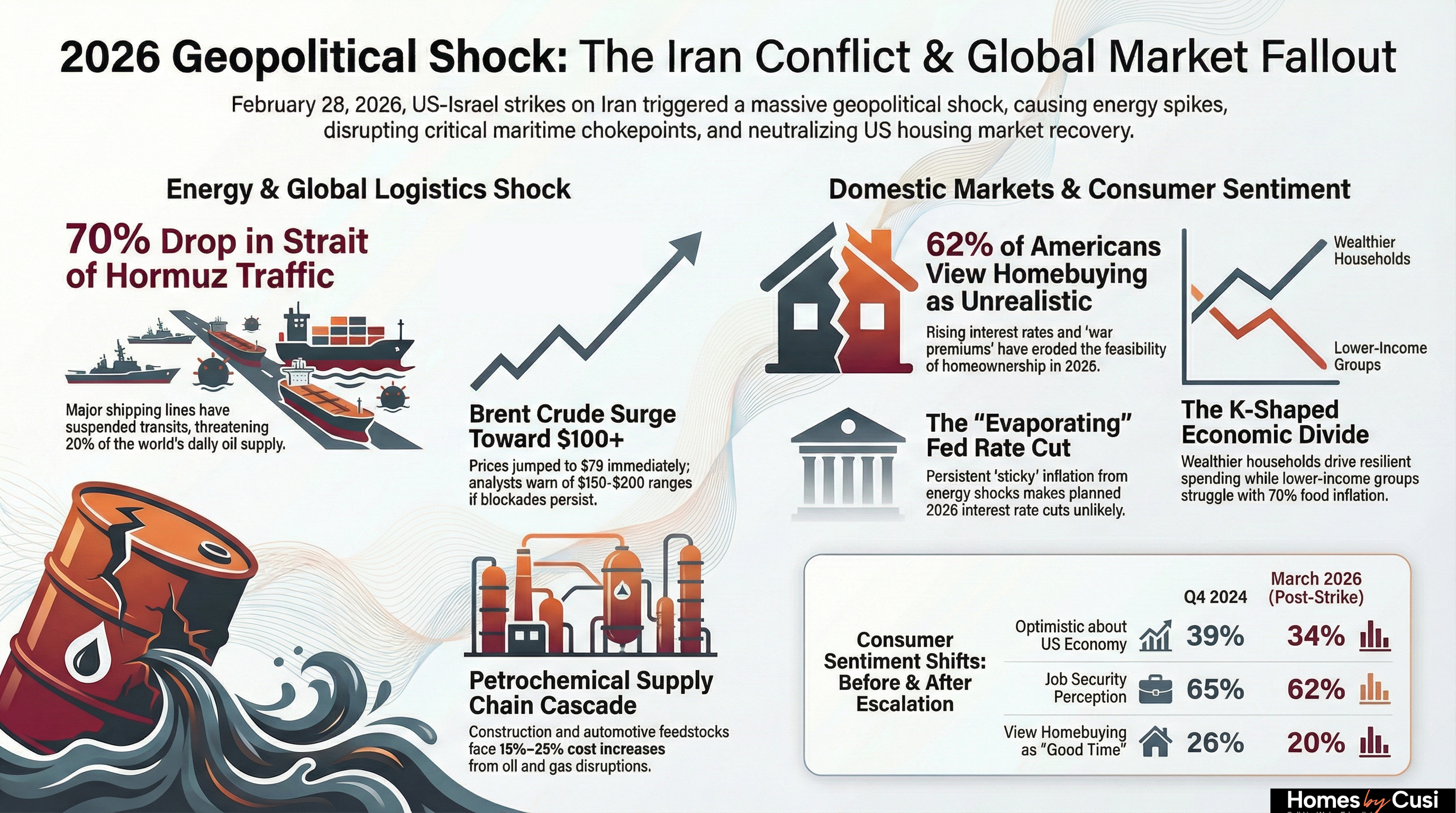

Chris Cusimano
| Homes by Cusi | Keller Williams Realty Boca Raton | PLACE | Boca Raton Realtors
or another way